Showing posts with label IFES. Show all posts
Showing posts with label IFES. Show all posts
Thursday, June 11, 2009

Friday, June 5, 2009
IFES Carnegie Final Election Brief
 IFES and Carnegie gave a final briefing to journalists for the election on Sunday. Following the last joint briefing by IFES and Carnegie in April.
Richard Chambers, Party Head of IFES in Lebanon, stated that there is an electoral competition in almost all districts. March 8 and March 14 have presented candidate lists almost throughout the country and this has been added to by independent lists in some districts. Thus, these elections are the competitive in a while.
Paul Salem, of Carnegie, stated that these are the first proper free elections since 1972 and outlined three posts-election scenarios:
1. Hung parliament what Salem sees as most likely. "This is where each camp holds large minorities and a group of independents, close to the President, holding the balance of votes," Salem said. Outside powers of Saudi, US and Syria are directly and indirectly trying to push for this occurrence Salem stated. Interestingly, Salem claims that Syria does not want an all out March 8th victory because Aoun has a difficult relationship with Syria and Hezbollah is closer to Iran. So for Syria the best result is a hung parliament and Syria successfully sold this idea to the US and Saudi as the best option, according to Salem.
2. March 14 win. March 14 have stated that they will refuse to grant veto power to March 8 but Salem warns this could lead to violence and should instead get clear commitments from March 8 to move forward on key political and economic issues.
3. March 8 win. Salem states that this could lead to a situation where there is a collapse in support for Lebanon from the international community and the Gulf states. This could lead to "a collapse in confidence in Lebanon and a precipitous decline into economic and social unrest."
Saturday, May 16, 2009
Thursday, April 30, 2009
Lebanon's Electoral System
A briefing paper by IFES on the Lebanese Electoral System. Further information can be found at www.ifes.org/lebanon
Lebanese Electoral System
Lebanese Electoral System
Wednesday, April 8, 2009
Registration Complete - 702 candidates

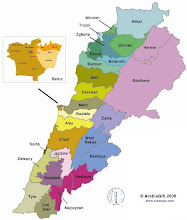
The registration for the elections is complete with 702 candidates registered. IFES (The International Foundation of Electoral Systems) complied a list of all the registered candidates. The most important news: 1. there is only one uncontested seat, which is in the Metn Armenian Orthodox seat; the Beirut II district will be a competitive race despite an agreement at Doha; that there appear at the moment to be too many candidates for certain seats and that both the March 14 and March 8 coalition will have to negotiate internally as to the final list they propose.
The breakdown of the candidates in the districts:
Akkar (North Lebanon) - 7 seats 51 candidates
Sunni 3 seats 27 candidates
Greek Orthodox 2 seats 14 candidates
Alawite 1 seat 4 candidates
Maronite 1 seat 6 candidates
Minieh-Dinnieh (North Lebanon) - 3 seats 40 candidates
Sunni 3 seats 40 candidates
Tripoli (North Lebanon) - 8 seats 50 candidates
Sunni 5 seats 27 candidates
Alawite 1 seat 10 candidates
Greek Orthodox 1 seat 5 candidates
Maronite 1 seat and 8 candidates
Zgharta (Mount Lebanon) - 3 seats 11 candidates
Maronite 3 seats 11 candidates
Koura (Mount Lebanon) - 3 seats 14 candidates
Greek Orthodox 3 seats 14 candidates
Bcharre (Mount Lebanon) - 2 seats 8 candidates
Maronite 2 seats 8 candidates
Batroun (Mount Lebanon) - 2 seats 12 candidates
Maronite 2 seats 12 candidates
Baalbeck-Hermel (Bekka)- 10 seats 51 candidates
Shia 6 seats 33 candidates
Sunni 2 seats 8 candidates
Greek Catholic 1 seat 6 candidates
Maronite 1 seat 4 candidates
Zahle (Bekka) 7 seats 69 candidates
Greek Catholic 2 seats 10 candidates
Armenian Orthodox 1 seat 8 candidates
Greek Orthodox 1 seat 8 candidates
Maronite 1 seat 7 candidates
Shia 1 seat 13 candidates
Sunni 1 seat 23 candidates
West Bekka-Rashaya (Bekka) 6 seats 34 candidates
Sunni 2 seats 19 candidates
Druze 1 seat 2 candidates
Greek Orthodox 1 seat 4 candidates
Maronite 1 seat 2 candidates
Shia 1 seat 7 candidates
Jbeil (Mount Lebanon) 3 seats 27 candidates
Maronite 2 seats 14 candidates
Shia 1 seat 13 candidates
Kesrwan (Mount Lebanon) 5 seats 30 candidates
Maronite 5 seats 30 candidates
Metn (Mount Lebanon) 8 seats 33 candidates
Maronite 4 seats 17 candidates
Greek Orthodox 2 seats 6 candidates
Armenian Orthodox 1 seat 1 candidates
Greek Catholic 1 seat 8 candidates
Baabda (Mount Lebanon) 6 seats 45 candidates
Maronite 3 seats 20 candidates
Shia 2 seats 16 candidates
Druze 1 seats 9 candidates
Aley (Mount Lebanon) 5 seats 17 candidates
Druze 2 seats 3 candidates
Maronite 2 seats 7 candidates
Greek Orthodox 1 seat 7 candidates
Chouf (Mount Lebanon) 8 seats 23 candidates
Marontie 3 seats 8 candidates
Druze 2 seats 5 candidates
Sunni 2 seats 7 candidates
Greek Catholic 1 seat 3 candidates
Beirut 1 5 seats 23 candidates
Armenian Catholic 1 seat 5 candidates
Armenain Orthodox 1 seat 5 candidates
Greek Catholic 1 seat 2 candidates
Greek Orthodox 1 seat 6 candidates
Maronite 1 seat 5 candidates
Beirut 2 4 seats 19 candidates
Armenian Orthodox 2 seats 6 candidates
Shia 1 seat 8 candidates
Sunni 1 seat 5 candidates
Beirut 3 10 seats 48 candidates
Sunni 5 seats 28 candidates
Christian Minorities 1 seat 3 candidates
Druze 1 seat 3 candidates
Evangelical 1 seat 3 candidates
Greek Orthodox 1 seat 5 candidates
Shia 1 seat 6 candidates
Saida (South Lebanon) 2 seats 5 candidates
Sunni 2 seats 5 candidates
Jezzine (South Lebanon) 3 seats 25 candidates
Marontie 2 seats 14 candidates
Greek Catholic 1 seat 11 candidates
Zahrany (South Lebanon) 3 seats 11 candidates
Shia 2 seats 6 candidates
Greek Catholic 1 seat 5 candidates
Nabatieh (South Lebanon) 3 seats 15 candidates
Shia 3 seats 15 candidates
Hasbaya-Marjayoun (South Lebanon) 5 seats 20 candidates
Shia 2 seats 7 candidates
Druze 1 seat 2 candidates
Greek Orthodox 1 seat 2 candidates
Sunni 1 seat 9 candidates
Tyre (South Lebanon) 4 seats 8 candidates
Shia 4 seats 8 candidates
Bint Jbeil (South Lebanon) 3 seats 11 candidates
Shia 3 seats 11 candidates
Tuesday, March 10, 2009
Voter Registration
 For the first time in Lebanon, the Ministry of Interior and Municipalities has launched a media campaign to raise awareness of the voter registration process.
 The campaign intends to spread awareness of the public’s right to check their details on the voter register.
Between 10 February and 10 March, the Election Law provides that all Lebanese citizens have the right to check whether they are correctly included on the voter register before it is published on 30 March.
The outreach campaign by the Ministry, created by IFES and Impact BBDO, encouraged public inspection of the voter register is important through high profile TV and radio spots as well as newspaper adverts and flyers.
Further to this, the Minister of Interior H.E. Mr. Ziyad Baroud sent a personal reminder through a text message to 500.000 mobile phone users and 1.8 million emails throughout Lebanon of the importance of checking their details on the voter register.
The Lebanese Electoral System
The International Foundation for Electoral Systems (IFES), for whom I am the Communication Associate, has just released a briefing paper explaining and outlining the Lebanese electoral systems. The paper can be found at http://www.ifes.org/publication/56c0cdaa64aa2cad85b3f5996e37cb4c/IFES_Lebanon_ESB_Paper030209.pdf
Information included:
1. The Lebanese Parliament: confessional seats
2. Lebanon’s Electoral Districts
3. Beirut’s Electoral Districs
4. Distribution of parliamentary seats by confession and district
5. Core Elements of the Lebanese Electoral System
6. The Electoral System in practice: the example of Baabda
7. Lebanese Ballot Papers and Electoral Lists: an overview
Information included:
1. The Lebanese Parliament: confessional seats
2. Lebanon’s Electoral Districts
3. Beirut’s Electoral Districs
4. Distribution of parliamentary seats by confession and district
5. Core Elements of the Lebanese Electoral System
6. The Electoral System in practice: the example of Baabda
7. Lebanese Ballot Papers and Electoral Lists: an overview
Wednesday, March 4, 2009
Lebanese Youth and Democracy
 In Lebanon the debate over whether the voting age should be lowered from 21 to 18 has been prominent in the lead up to the general elections in June of this year. Despite the debate ending in paralysis and the voting age remaining at 21; the drive to lower the voting age to 18 continues with the 2010 municipal elections targeted. Nahwa al-Muwatiniya (NA-AM) a local Lebanese NGO and, with the assistance of IFES, in their project Baddi Koun Mas’oul is ensuring that if the voting age is lowered then the youth are not left subservient to the Lebanese electoral system. NA-AM through their project Baddi Koun Mas’oul is educating and empowering students across the country through informing them of their rights and duties with regard to voting and educating them about the democratic process.
 The Baddi Koun Mas’oul project is structured into a four to six hour session and is done with a group of roughly 50 students that are 16 to 17. These students are taken through a nine step process that takes them through the different aspects of the democratic process. Within this nine step process the students are introduced to different democratic ideas such as the difference between a majority and proportional electoral system. The students are also informed of their rights and duties as responsible citizens within the context of the democratic system and the ethical standards required for the integrity of the electoral procedure. Students then learn about more technical issues concerning elections that include: election administration, observation and media regulations. The program is being rolled out in 52 state schools across the country in both rural and urban areas.
In the village of Diddeh based in Northern Lebanon, 53 excited 16 year olds listened to Tamim Bou Karroun, the Project Coordinator for Nahwa al-Muwatin. Bou Karroun and six trainees organized the students into groups to form the election administration body two observer teams and three political parties. The youth quickly arranged themselves into their different parties that they then named and debated about what their demands would be. The three parties they formed were Reform and Future, Our Voice and Black Hand. Demands were made such as: refurbishing the school, realizing student needs and teaching more foreign languages apart from English, Arabic and French that are already on offer! After the nominated spokesperson from each party read out the demands, the youth were then were ready to vote for who they wanted to elect. “We do two elections for the youth to show them the difference between a proportional election system and a majority,” said Tamim Bou Karroum. Election booths were set up with the help of a black curtain and some sticky tape while the electoral administrators ensured that each voter was registered, allowed to vote in private and ticked off the electoral list. After all the votes were in each vote was read out, accompanied by much excitement as to who would win. In the end it was a tie with each party gaining one seat each and three votes being cancelled.

As Nahwa al-Muwatiniya continues this project to other schools across the country it is allowing hundreds of pupils to gain their first real exposure to the culture and process of democracy. While it is likely that many of the students involved in this project will not get the chance to vote until they are 21; Baddi Koun Mas’oul is preparing the ground if the law is changed by ensuring that the very people whom this law may apply to are made aware of what it means to be engaged in the electoral process. Most importantly Baddi Koun Mas’oul is engaging young people in the process of democracy and embedding the concepts that come with the democratic process. Nahwa al-Muwatiniya through Baddi Koun Mas’oul is building a firmer foundation within the youth of the democratic process, from which Lebanon will hope, to build a stronger democratic system.
Subscribe to:
Posts (Atom)


 Posts
Posts


