Sunday, May 31, 2009

The key battles: Saida

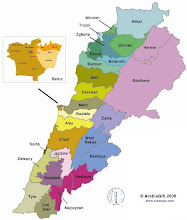
One of the most interesting electoral battle occurring outside the Christian areas is in Saida. The city of Saida is fascinating because although it is majority Sunna the dominant Sunni political organization, the Future Movement, does not have political dominance over the city, as yet.

For all the talk of a war between Sunni and Shia in Lebanon, this Sunni dominated city (84% of registered voters) currently has an incumbent MP Ossama Saad who is pro-Hezbollah and affiliated with the opposition coalition of March 8. Thus, Saida may illustrate the true nature of Lebanese politics which is less directly concerned with confession but more to do with networks of patronage and family connections/history in a given area that then becomes intertwined with confession. Saida also represents a district where a class struggle becomes more directly involved in the electoral process. With Ossama Saad making himself out to be a man of the people and emphasising direct contact with the people, while the Future Movement candidates Bahia Hariri and Siniora by their prominent political national roles obviously cannot offer this.

Ossama Saad, who inherited his parlimentary seat from his brother who died in 2002, has never faced an election before, as in 2005 the two Sunni seats were allocated to Saad and Bahia Hariri in an agreement. A lot has changed in Lebanon since the last proper election in Saida in 2000 and Future, along with many anaylsts, expect to win both Sunni seats in Saida. However, Ossama Saad does have significant support in Saida especially among the trade unions and it will be a tightly run contest. Saad is not at all pleased that Fouad Siniora is challenging his seat in this election and has made clear that he will not make it an easy contest. The possibility of violence in this district has been raised by analysts.

Saida in detail

Currently, the candidates running in this district are:

Future Movement (March 14)
Bahia Hariri, the sister of assassinated former PM Rafik Hariri
Fouad Siniora, the current Prime Minister and former confidant of Rafik Hariri

The Popular Nasserite Organisation (PNO) (March 8 affiliated)

Ossama Saad, brother of deceased former MP Mostapha Saad and son of PNO founder Maarouf Saad who was assassinated at the beginning of the civil war.


The voters in Saida are split between the Future Movement, the Popular Nasserite Organization (PNO) and Jamaa Islamiya. Saida was previously part of a larger district but now has its own district with two Sunni seats agreed at Doha. The historical particularities of Saida have meant the political landscape has been divided between the political and family heirs of assassinated former PM Rafik Hariri (Future Movement) and Mostapha Saad (PNO) (both pictured left).

Future have been involved in intense negotiations with Jaama Islamiya, with reports stating that the Prime Ministers office was used for the negotiations that could lead to complaints to the Constitutional Council post-election. The result of these negoitations was a seat in Beirut District IIIwas given to the Jaama Islamiya by Future to ensure that Jaama tell their supporters in Saida to vote for Future. The giving away of one seat in Beirut III by Future Movement to Jaama Islamiya can be seen as the Movement ensuring that those in the Sunni community sympathetic to Hezbollah and March 8 are marginalized, while other opponents are given more room often at the expense of their own supporters. This has also occured in Tripoli and has been quite a painful process for the Future Movement.

Mostapha Saad (pictured on the right) has made clear his anger that Future has decided to field two candidates for this district and not, as has been traditionally done, leave one seat empty. A media storm was whipped up when Siniora announced his candidacy and Ossama Saad has ensured the pressure continues. Saad has warned of a fierce conflict during and after the elections.

While, the risk of violence is present in this district the voters of Saida will for the first time have a chance to express what kind of identity the city will have. Will it be a Future Movement city that would confirm the party as the representatives of the Sunnis in the South and position the city as a March 14 heartland? Or will the voters of Saida maintain the city as neutral with a candidate Saad who is sympathetic to Hezbollah and affiliated with March 8 balanced by Bahia Hariri?

Thursday, May 28, 2009

The Constitutional Council

The Constitutional Council has arrived! Here is your essential guide from IFES:

The clear and present dangers

Some are still predicting that these elections will be violent because after all, as I have been told, "this is Lebanon."

The clear and present dangers to these elections are currently:

1. The Israeli maneuvers that will take place on 31st May-4th June - Hezbollah in particular are warning that these maneuvers mean "that the Zionist entity [is] getting ready for war."

2. The continued uncovering of Israeli spy networks - The uncovering of these networks is increasing the tension in Lebanon especially because some of the networks have been linked to political parties in Lebanon, such as the spy Ziad Humsi to the Future Movement. So far 30 Israeli spies have been arrested the latest being an army colonel. Lebanon has officially complained to the UN about these spy networks.

3. Political rhetoric - Although there have not been too many fiery speeches, as the election draws closer politicians may try to galvanize support by upping the political rhetoric. Thus, far the only highly controversial speech has been the Nasrallah comment that May 7 "was a glorious day" that created anger and disbelief, even among those that are pro-the resistance.

4. Clan violence/political violence related to the elections - In the Bekka the first 'election related' death has occurred with a clash at a Future Movement office the cause of the clash is not known. It is likely that these kind of clashes are tied up in the local family disputes that is manifested also into political affiliation. However, the risk of family feuds developing into election related ones is a danger.

Will calm reign?

The Der Speigel report - This report illustrated the calm political climate at the moment. This explosive report stated that it had received information that Hezbollah was responsible for assassinating of PM Rafik Hariri . If this story occurred last year would there have been such a calm and calculated reaction by the two coalitions? A match was struck but has been promptly blown out by all sides. Hopefully this is a sign that these elections will pass without too much trouble.

Wednesday, May 27, 2009

Freedom and Resistance Day


Some pictures I took from Freedom and Resistance day . Here is a Hezbollah view of what the speech was about.

Main point of the speech: Der Speigel report is an Israeli plant and accusation. We are friends with everyone in Lebanon special focus on the Druze and Walid Junblatt. Basically more conciliatory speech than the previous two that Nasrallah has delievered.

Sunday, May 24, 2009

Hezbollah and the Hariri Tribunal

Just two weeks before the elections Der Spiegel journalist Eric Follath claims to have uncovered - from unnamed sources "close" to the International Tribunal - that Hezbollah are responsible for Hariri's assassination:

"SPIEGEL has learned from sources close to the tribunal and verified by examining internal documents, that the Hariri case is about to take a sensational turn. Intensive investigations in Lebanon are all pointing to a new conclusion: that it was not the Syrians, but instead special forces of the Lebanese Shiite organization Hezbollah ("Party of God") that planned and executed the diabolical attack."

This allegation of course has been strongly rejected by Hezbollah that see this article as a smear and nothing more. Those that also see this article as rubbish are coming up with interesting details that have been listed by Syria Comment. One of the most interesting facts is that this article appears to be very similar to a Le Figaro article in 2006, according to Syria Comment.

The Der Spiegel article gives fascinating detail about one particular character that is central to the allegation of Hezbollah's involvement.

A reckless plotter Abd al-Majid Ghamlush in the attack, Follath claims, unraveled the network when he phoned his girlfriend on one of the "hot phones":

"Ghamlush's recklessness led investigators to the man they now suspect was the mastermind of the terrorist attack: Hajj Salim, 45. A southern Lebanese from Nabatiyah, Salim is considered to be the commander of the "military" wing of Hezbollah and lives in South Beirut, a Shiite stronghold."

Leaking Tribunal

What should be most worrying is that this leak has occurred at all.

It is unfathomable as to how at such a sensitive time in Lebanese politics and just after the four generals release that such a prominent leak could occur; especially two weeks before an election Hezbollah are expected to do well in.

If the Tribunal can not keep its own house in order how can it solve one of the most complex murder mysteries of modern times? Further to this, how will it be able to substantiate the claims that Hezbollah was involved with the assassination of Hariri with the claims out in the open?

If of course Follath fabricated this story then of course that is its own story. However, Der Spiegel is not a mickey mouse publication and apply high standards to their journalism. Follath is part of their investigative journalism team so it really is a Der Spiegel report. Some are pointing to Follath's book on Mossad to show his ties to the Israelis but no real allegations show an obvious bias.

Political Ramifications

In terms of the political effect that this news story has had: Israel has already jumped on the chance with Israeli FM Liberman calling for an international arrest warrant to be given to Nasrallah.

Of greater importance for Lebanon's internal stability is the wise choice thus far of the Future movement to not comment on this article. Although some are suggesting that the Future Movement may have planted the story to dent Hezbollah's chance of getting elected. There is no proof of this. Hani Hammoud, a spokesperson for MP Saad Hariri, refused to comment on the Der Speigel report.

“We do not comment on any media or other kind of reports if the source is not the Special Tribunal,” Hammoud said.

This report will turn the heat up on this election in terms of political rhetoric and the possibility of electoral violence. While the international tribunal now has to continue its investigations in an even more politically tense and suspicious environment. Has this leak sent the International Tribunal into oblivion rather than anyone else?


Friday, May 22, 2009

Biden tying aid to votes

Vice-President Biden is in town and among the tabouleh surrounding his visit he has said nothing new. The policy that US will tie aid to votes was reiterated and the standard we support no one expecpt for the people that we support.....

Biden, the highest US ranking official to visit Lebanon in 26 years, stated “We will evaluate the shape of our assistance programs based on the shape of the new government”. Biden then did a lovely rhetorical circle by stating that “I do not come here to back any particular party or any particular person. I come here to back certain principles.”

Thus, the same dance between America and Iran is being played out in Lebanon. However, all we be pleased that the tempo is slower and although there is no love music the death metal has at last been put away.

Thursday, May 21, 2009

EU Media Monitoring

An interview with Mirella Marchese, the head of Media Monitoring as part of the EU Observation Mission.
What is the main objective of international media monitoring?

The main goal of media monitoring within election observation missions is to assess whether parties and candidates gain fair and equitable access to the media, whether political contestants are covered in an unbiased manner, whether the media adhere to regulations on coverage.

Will there be an interim report of media abuses or will reporting only occur after the elections?

In accordance with standard election observation missions’ methodology and in line with the principle of non-interference in the election process, media monitoring findings will be issued at the end of the campaign and will be part of a Preliminary Statement presented immediately after E-day. A more comprehensive analysis will be part of a Final Report normally issued within two months of the completion of the electoral process.

Are the qualitative and quantitative methodology used standardized for all countries or is the methodology tailored to each situation?

A standard media monitoring methodology used by an election observation mission would produce an analysis of the distribution of media time and space given to political contestants. The project aims to provide a clear and reliable observation of the distribution of time and space, based on the measurement of the precise amount of coverage received and its tone. The quantitative analysis of the amount of media coverage and the tone of the coverage constitutes the core of methodology adopted by every mission. However, same variables in the research design can vary according to the different contests. The media analyst will need to refine the monitoring methodology according to the media and political landscape, to the different kinds of elections and to the legal framework in a given country. The methodology usually includes a qualitative analysis, too. The qualitative analysis can focus on a range of different aspects including: instances of hate speech and inflammatory language, media coverage of voter education, the formats used to cover election issues.

What is the size of the media monitoring team?

A media unit of an election observation mission is usually composed of a media analyst and a number of national media assistants. The number of media monitors depends on the size of the sample selected for the analysis. The European Election Observation Mission to Lebanon is currently working with a media monitoring team of 14 media monitors. Our monitored sample includes 8 Lebanese TV stations and 4 newspapers.

Topics